Touch + movement
Thumb touches and finger motion work together. Tap, glide, hold, or circle to control what is in view.

Your world, at your fingertips.
Discover SynoRing
SynoRing turns finger movements and thumb touches
into controls for your AR glasses.
A gesture controller.
Made to feel natural.
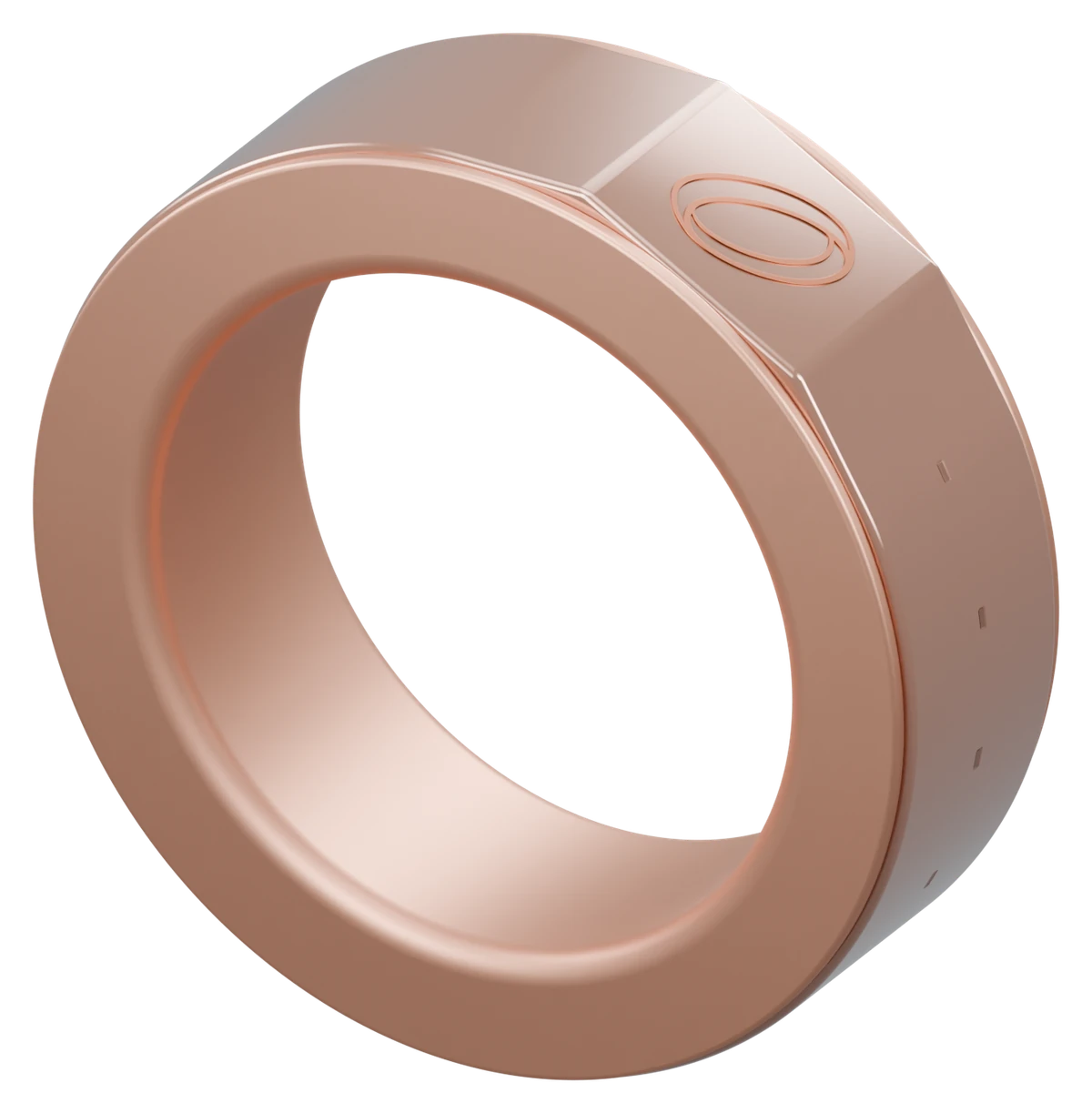
AR control.
Without the interruption.
Select with a tap. Scroll with a glide. Adjust with a circle.
Thumb touches and finger motion work together. Tap, glide, hold, or circle to control what is in view.
Designed for subtle control at your side, without speaking a command or reaching toward a floating screen.
Explore music, reading, and navigation today in our interactive browser demo.
Adjust the volume. Keep your rhythm.
Move through a page with a glide.
Your next direction, a tap away.
Sensors read your movement. Touch gives it intent.
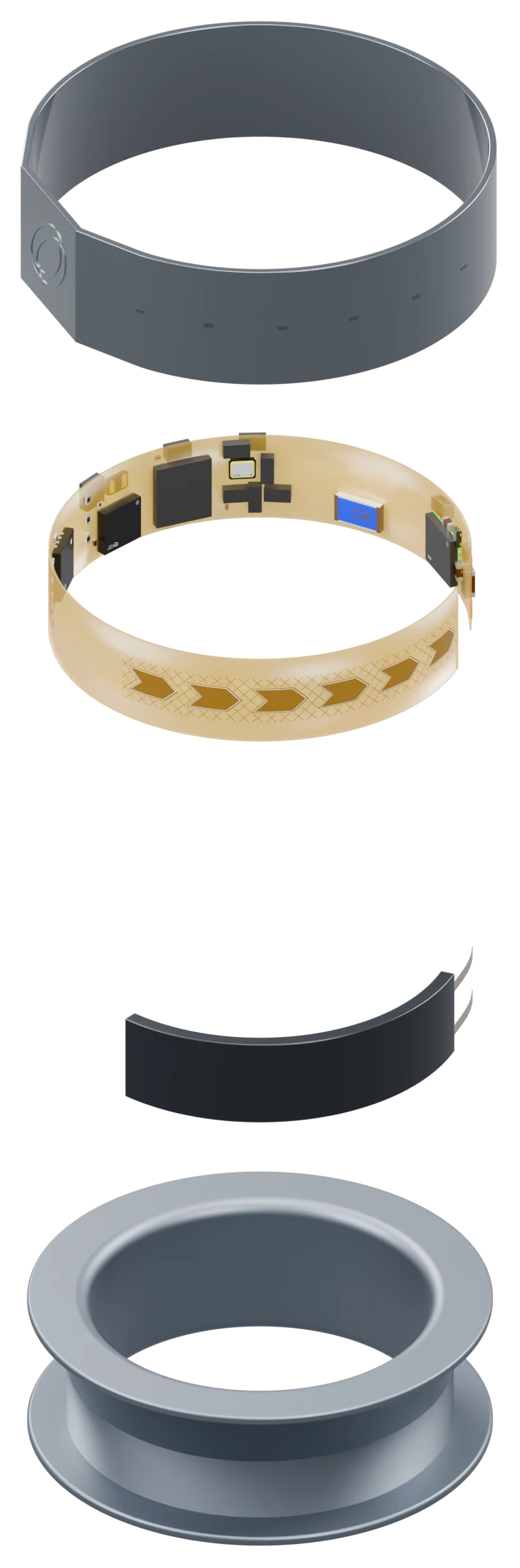
A thin glazed shell. Six touch points line its outer face, right over the electrodes.
A translucent C-shaped board with six outward-facing electrodes and the electronics for motion sensing, gesture processing, and wireless connection.
A curved cell that sits just inside the touch area.
One piece of stainless steel. Its rims form the ring's two steel edges.
Our integration direction connects ring input to spatial applications through a phone-side software layer. Device support will be confirmed through testing.
Touch and motion input
Interpret and map gestures
Select, scroll, and adjust
Building a spatial reader, a media interface, or something we have not imagined? Help shape how ring input fits your application.
Build with SynoRingYour context defines the action.
Join the waitlist for launch updates and developer pilots.
 Space Gray
 PlatinumRose Gold
 Gold
GoldEarly means early. SynoRing R1 is open for pre-order and estimated to ship in Q1 2027, with free shipping within the US. Join the waitlist to follow developer pilots and production updates.24
Compatibility is being explored. Our direction is a phone-side SDK that connects with AR ecosystems. Supported devices will be announced after validation.
We would love to hear from people building spatial interfaces. Tell us what you are working on.